Water Council of Relationality
Main Content
Renavigating our relations with water across bodies, systems, and stories
The Water Council of Relationality (WCoR) is a collaborative studio exploring how we relate to water—not as a utility or resource, but as a living, shaping force within broader environmental, social, cultural and political ecologies.
Contesting the historical precedent of Dutch water councils—regional bodies responsible for managing specific water systems, rooted in an anthropocentric view of water as something to be feared, controlled, and used—this project responds to the fact that today’s water issues are no longer local but global, inviting us to rethink our relationship with water.
The design studio invited students to join a fictional Water Council that viewed water not as a utility, but as a vital part of our ecology of relationships. From September to December 2024, 55 students from Design Academy Eindhoven’s Social Design Master’s and the Institute of Applied Arts at National Yang Ming Chiao Tung University came together to create this new kind of council. Over three months, they explored overlooked and urgent water relations across politics, infrastructure, memory, media, sexuality, and more-than-human worlds.
Together, these projects ask: What shifts when we stop treating water as a passive resource and instead recognise and care for it as a collaborator, a witness, and a condition of life? How do our digital habits, bodily experiences, cultural practices, and political structures affect the water we are made of?
Systems, Infrastructure and Digital Entanglements
Some members examined the politics of our entanglements with water in the spaces we inhabit—both physical and digital.
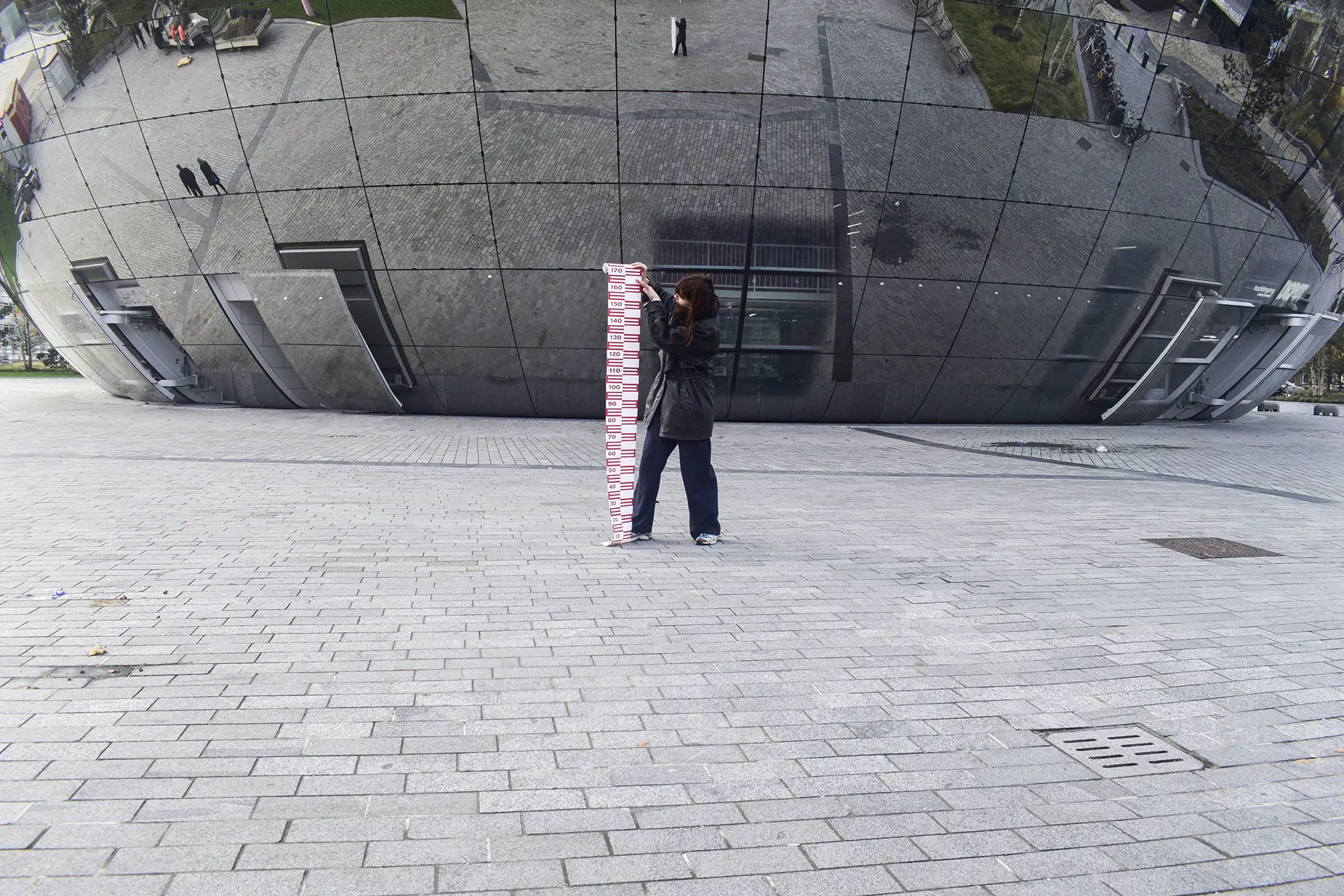
Suze Ceelen’s project explored the often-invisible water management systems in the Netherlands, drawing attention to the rising water levels embedded in daily urban life.
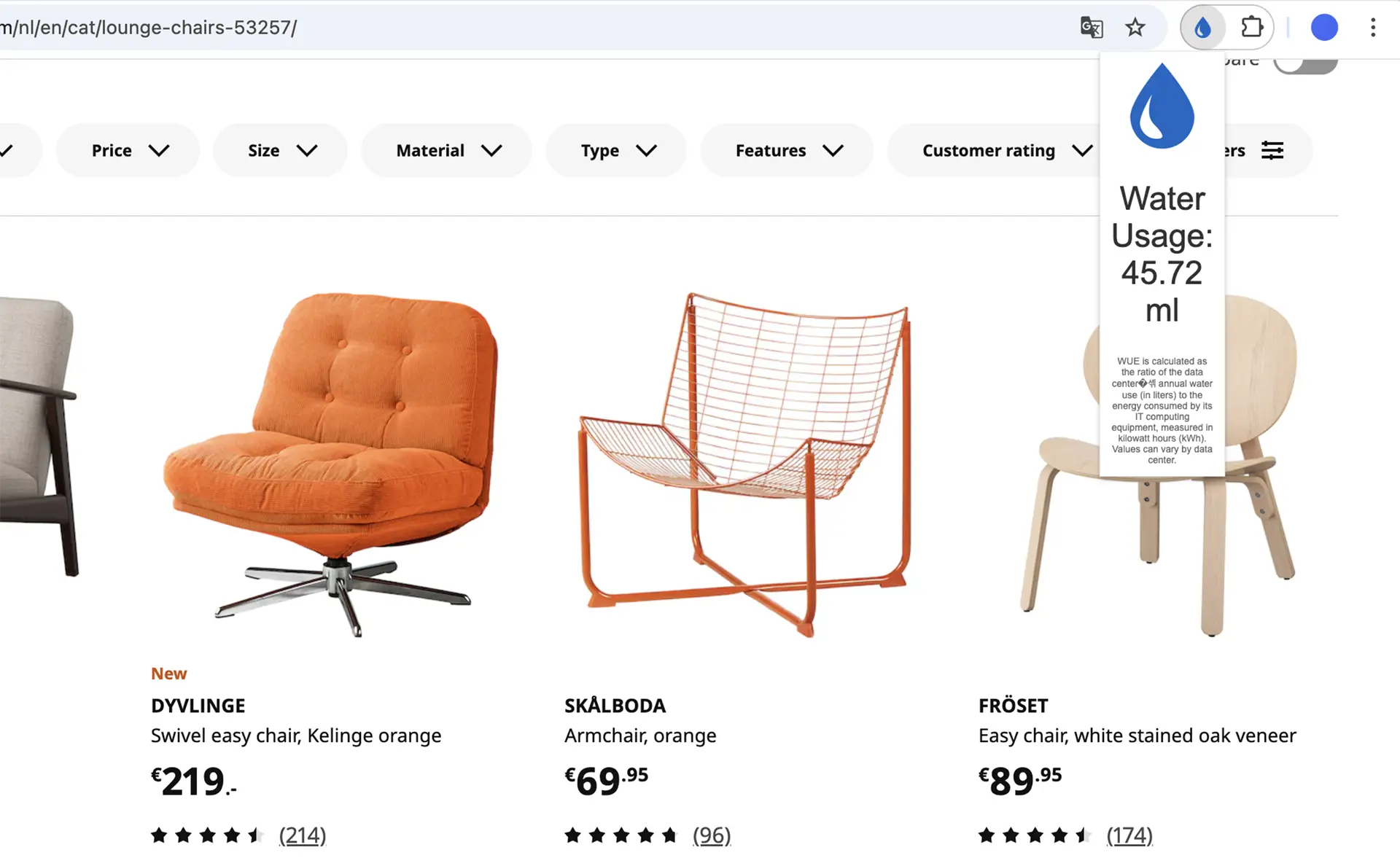
Yirang Ok’s While You Are Searching revealed the environmental impact of digital infrastructure through a browser plugin that visualises water usage by data centres.
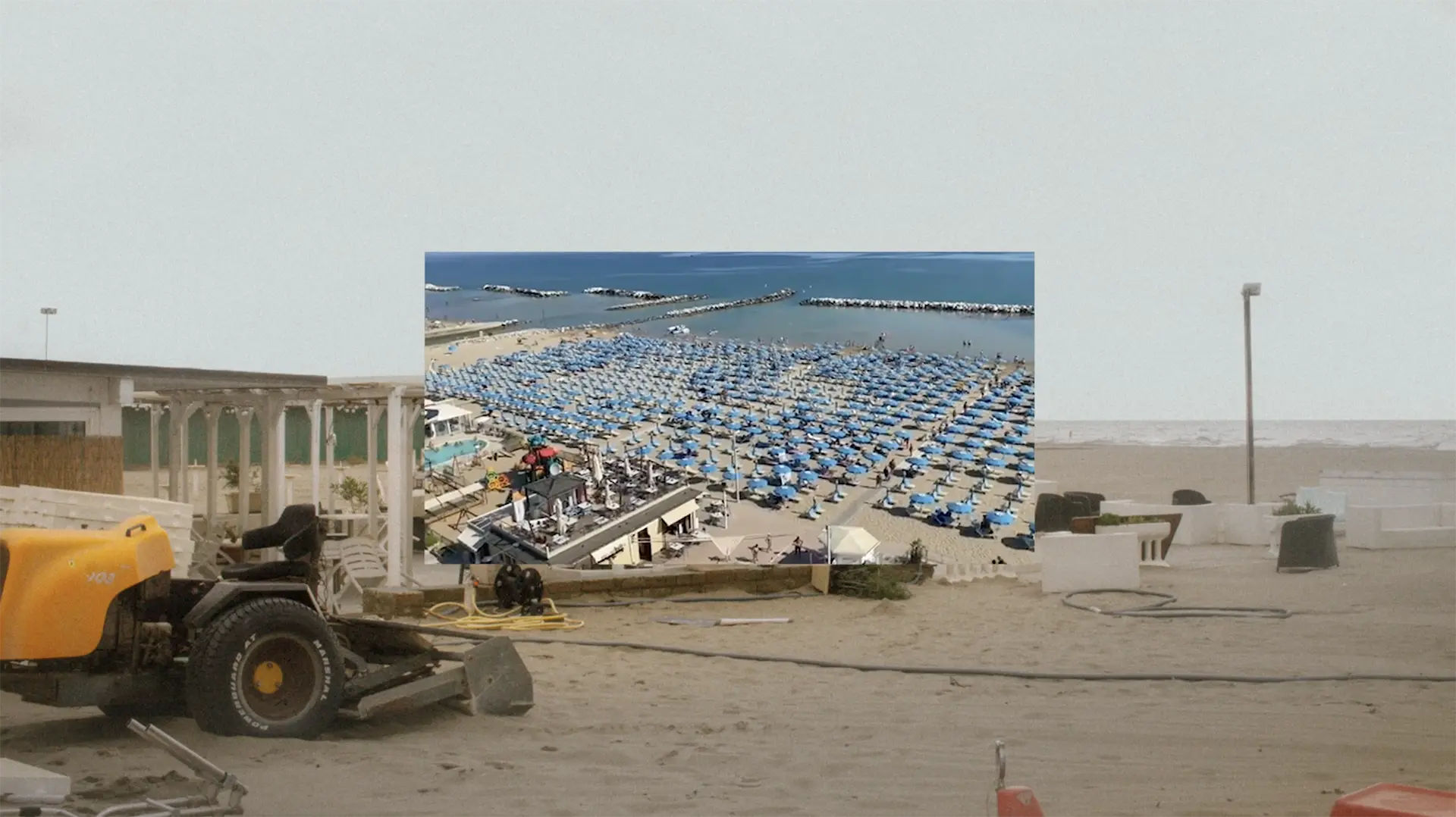
Silvia Banci investigated how the privatisation of Italian beaches expropriates the commons, restricting access to marine landscapes.
Bodies, Fluids and Trust
Some projects explored water as both a physical substance and a symbolic medium in relation to sexual and sexualised bodies.
Fluid Boundaries Reconstruction Center by Eliz Guei, Leo Kao, and Cinzia Zhang speculated on future queer biotechnologies, imagining how male bodies might produce lubricating fluids through surgical intervention.
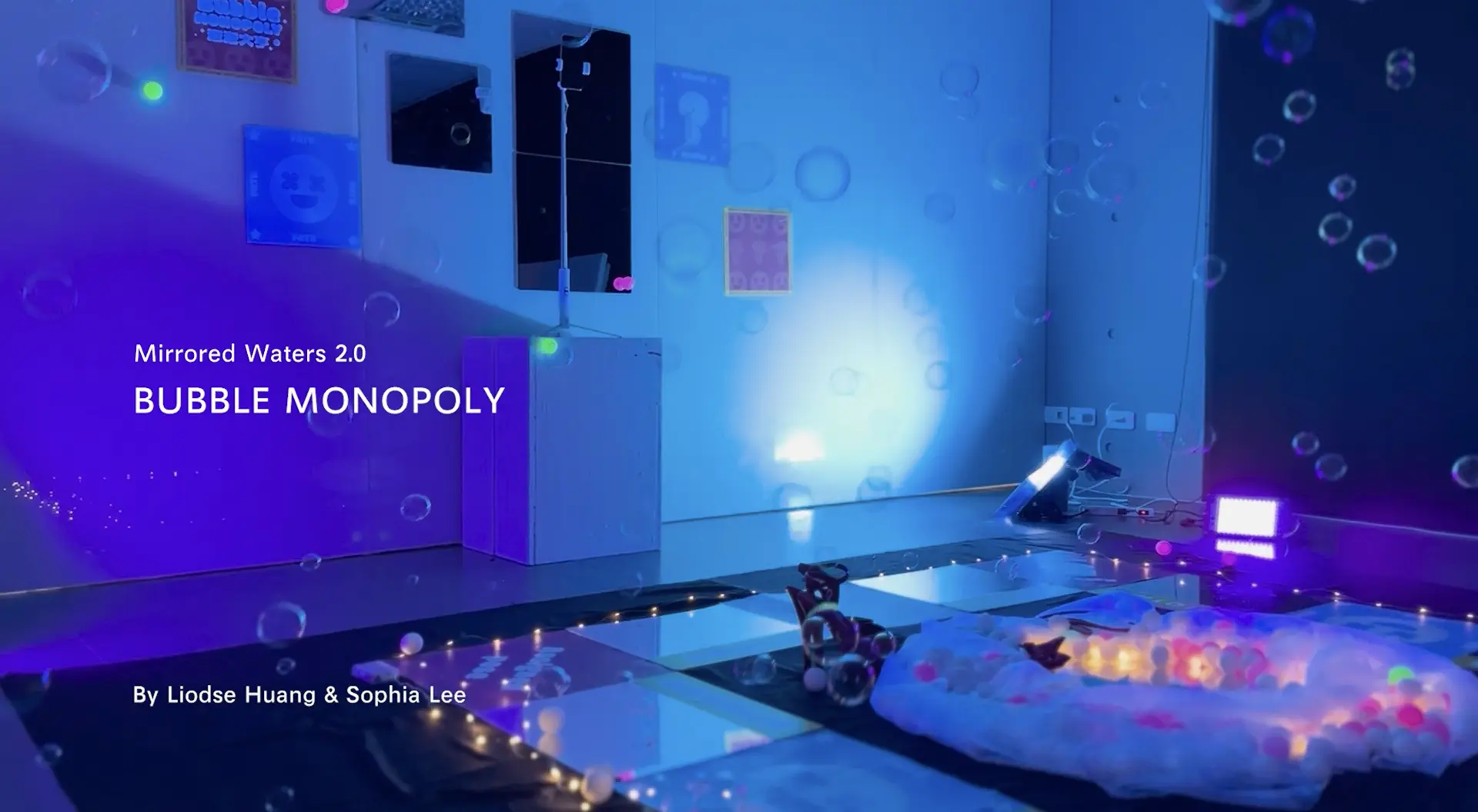
Bubble Monopoly by Sophia Lee and Liodse Huang was an interactive game confronting the trauma of child sexual abuse by placing participants in emotionally charged scenarios.
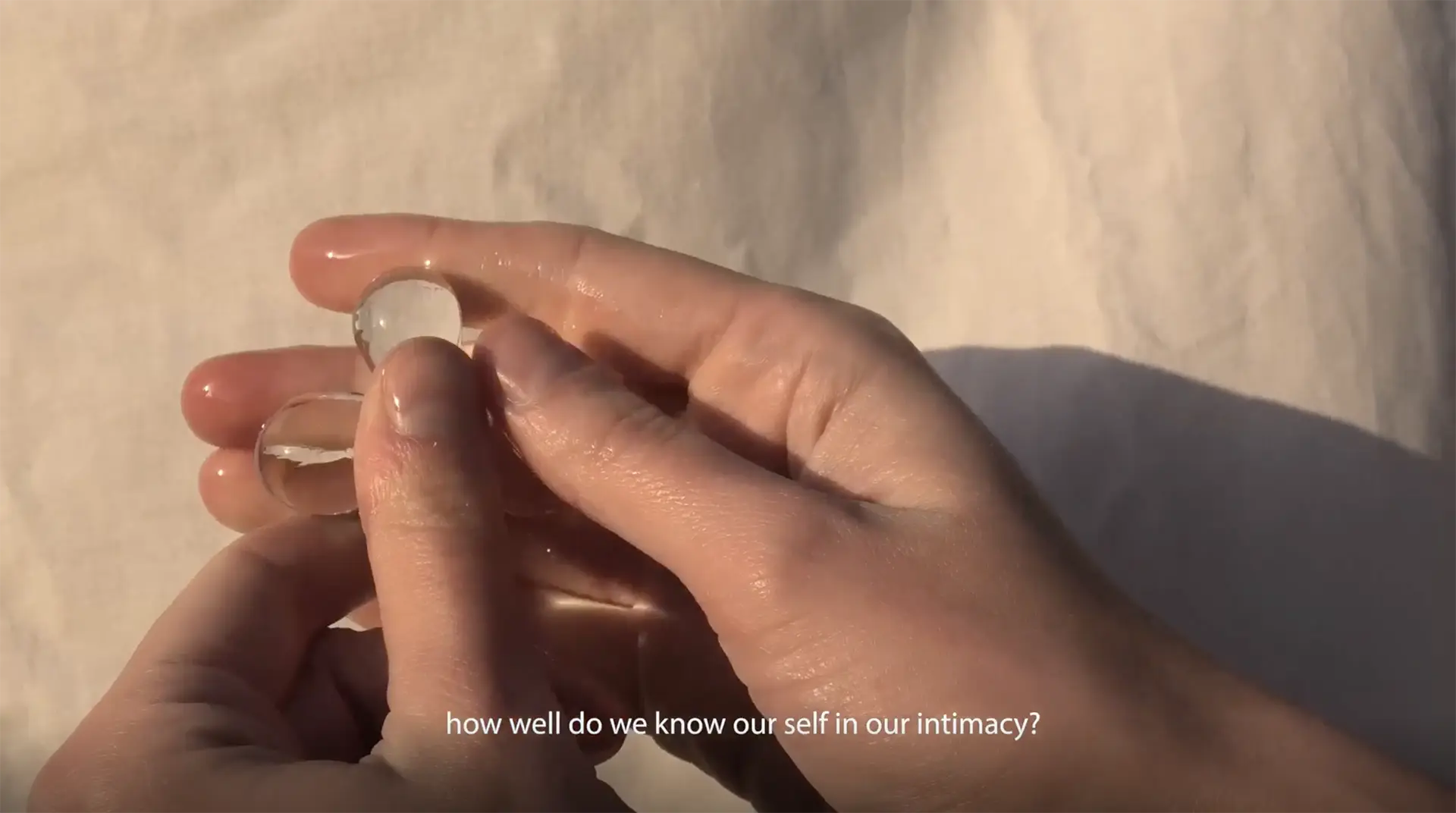
Valeria Ronchi’s Fluid Trust proposed a shared space in which the fluidity of sexual identity and intimacy could be experienced and redefined.

Media, Memory and Cultural Narratives
Other investigations examined the cultural, social, and aesthetic meanings of water—through media, memory and perception.
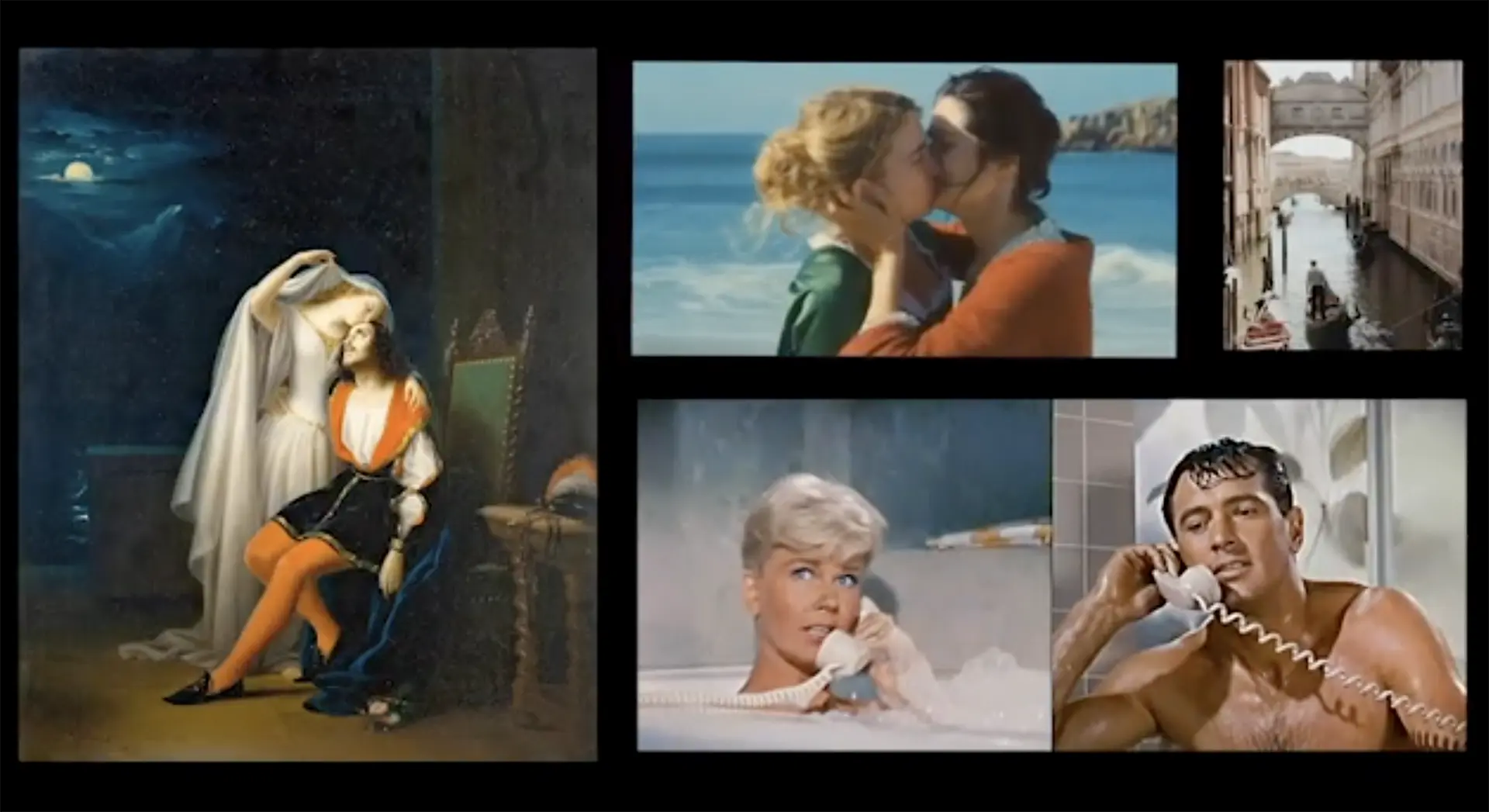
Madelon Lordereau’s Through Water proposed a dating agency centred around bodies of water, referencing the role of water in romantic tropes found in popular media.
Tana Jeić’s Water Whispers explored how collective memory and storytelling around water can rebuild human-environment relationships.
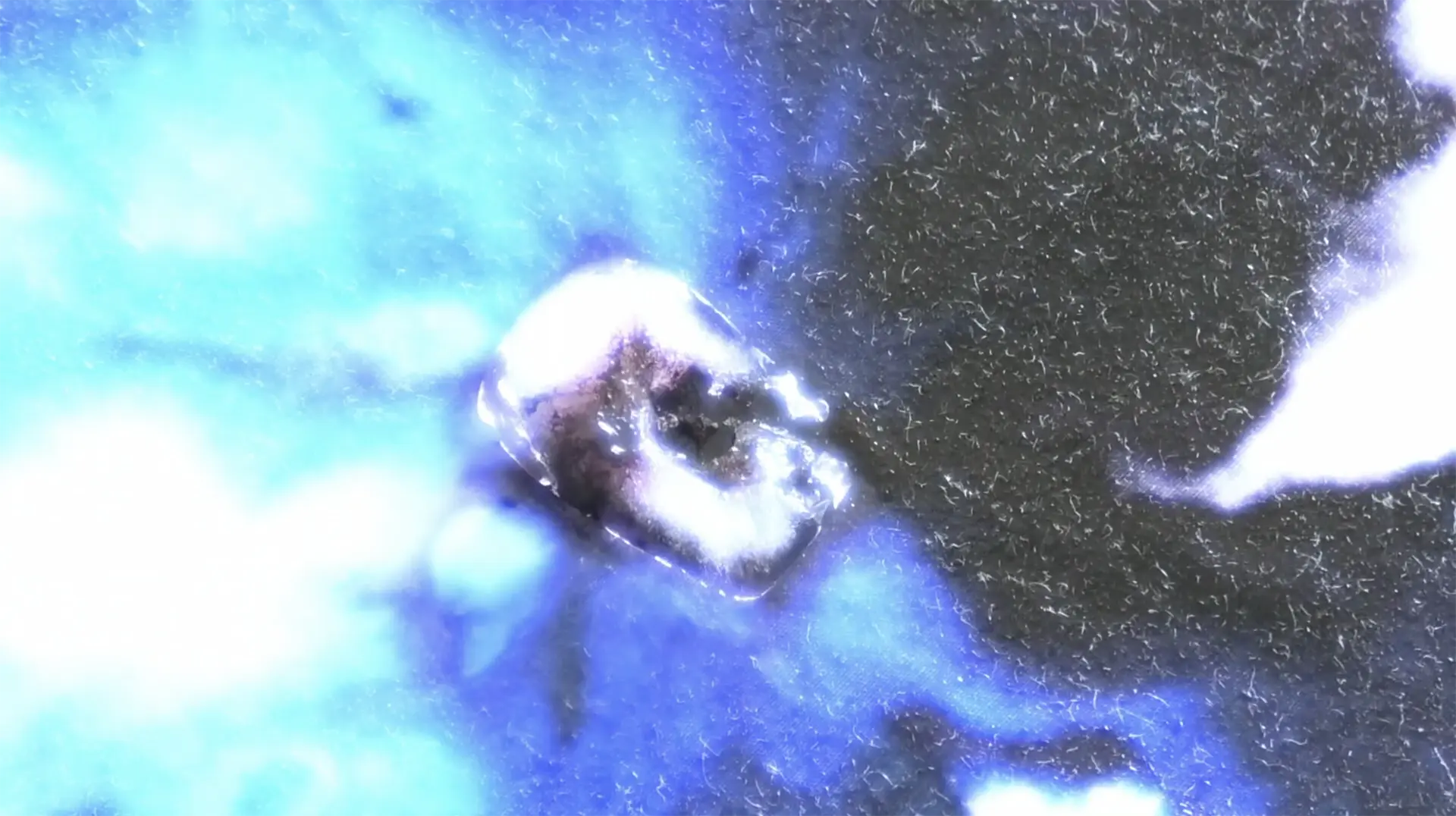
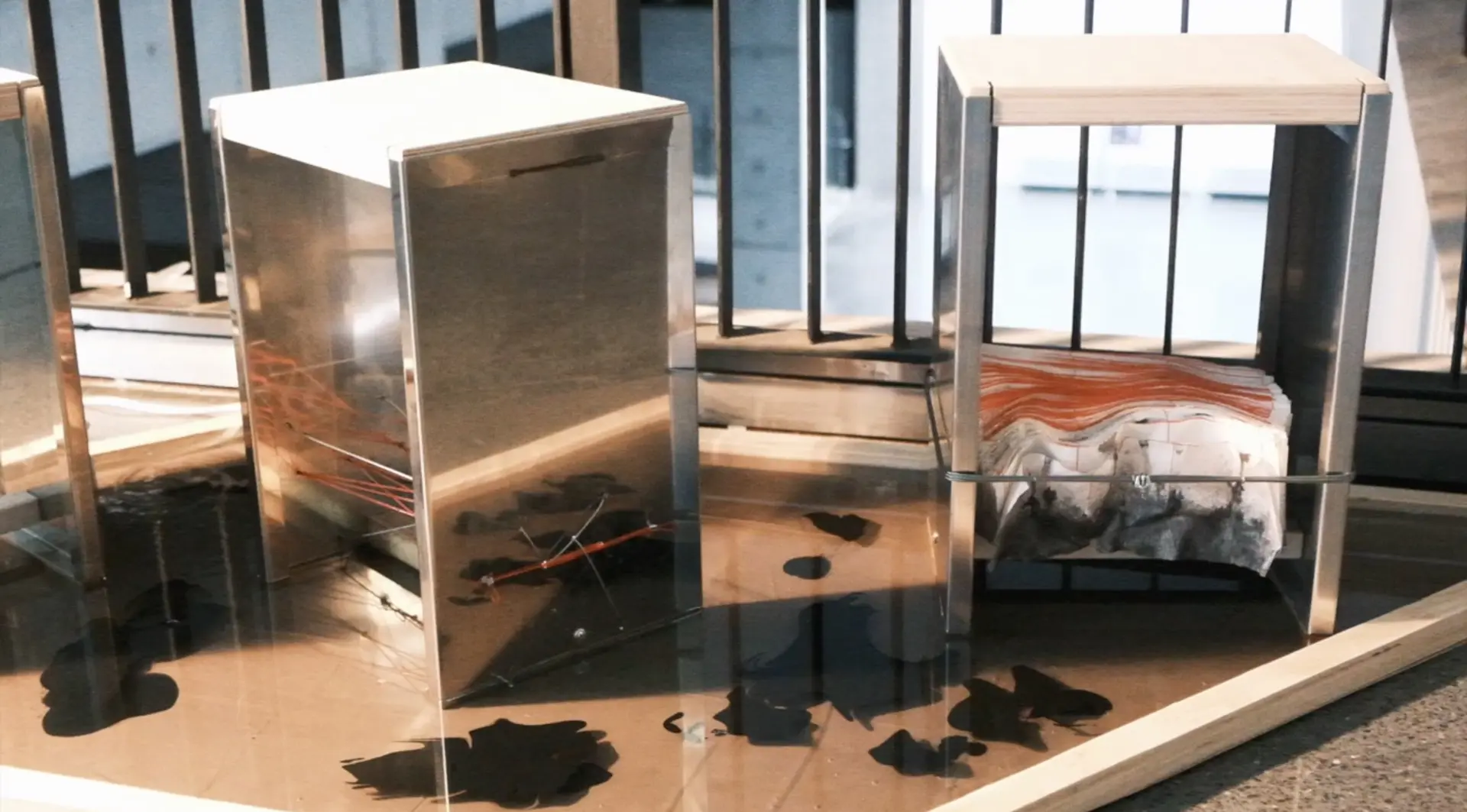
Sin Jhih Wu’s Liquid Memory examined the perceptual distortions water imposes on objects—how it refracts, warps, and alters surfaces and meaning.
More-than-Human Relations and Ecological Agency
More-than-human beings—water itself and the life it holds—were acknowledged as active collaborators in the creative and critical process.
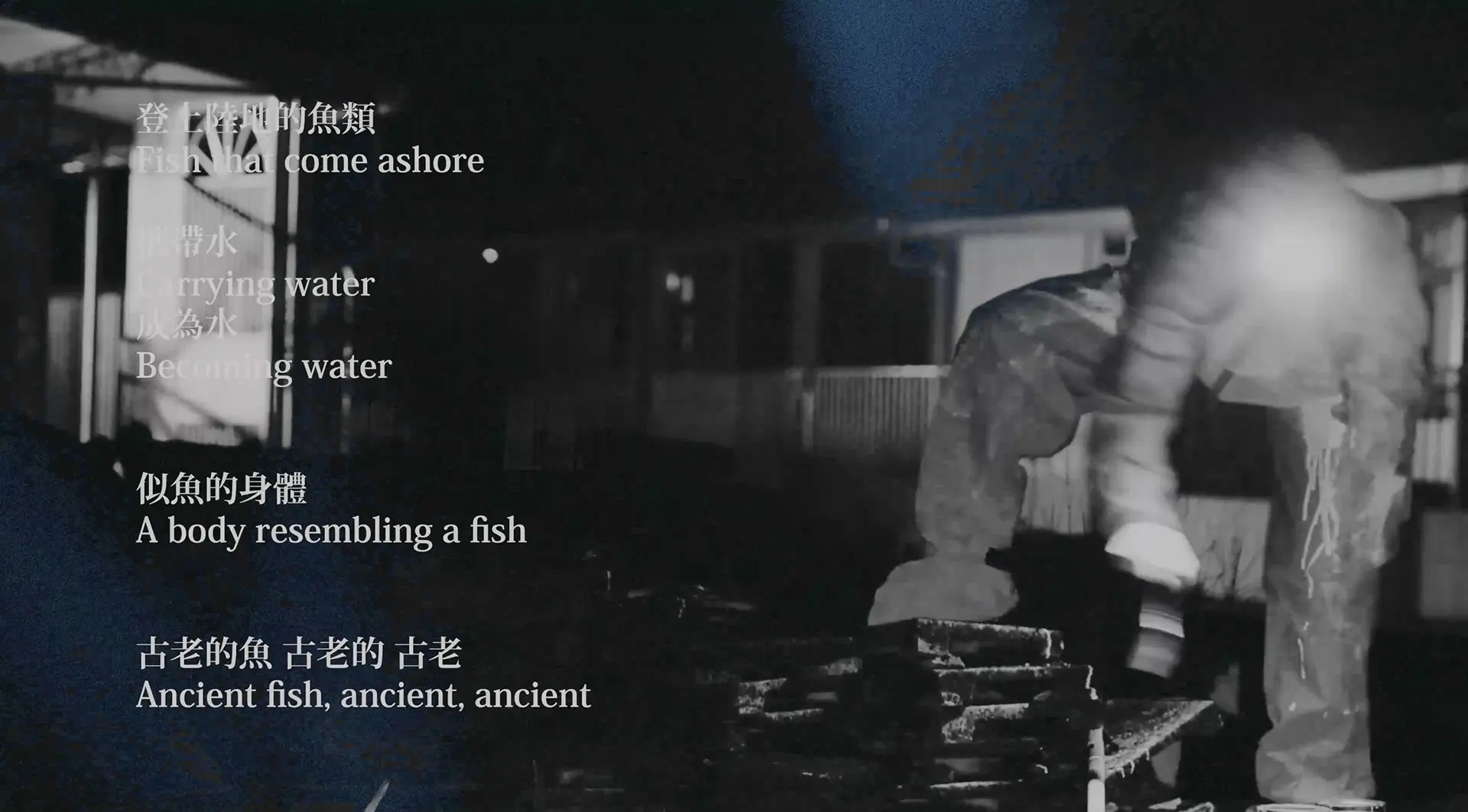
Mingchieh Lee’s Fishing Beginning: The Birth and Vanishing of a Grouper traced interspecies connections between humans and fish through sound, performance and myth.
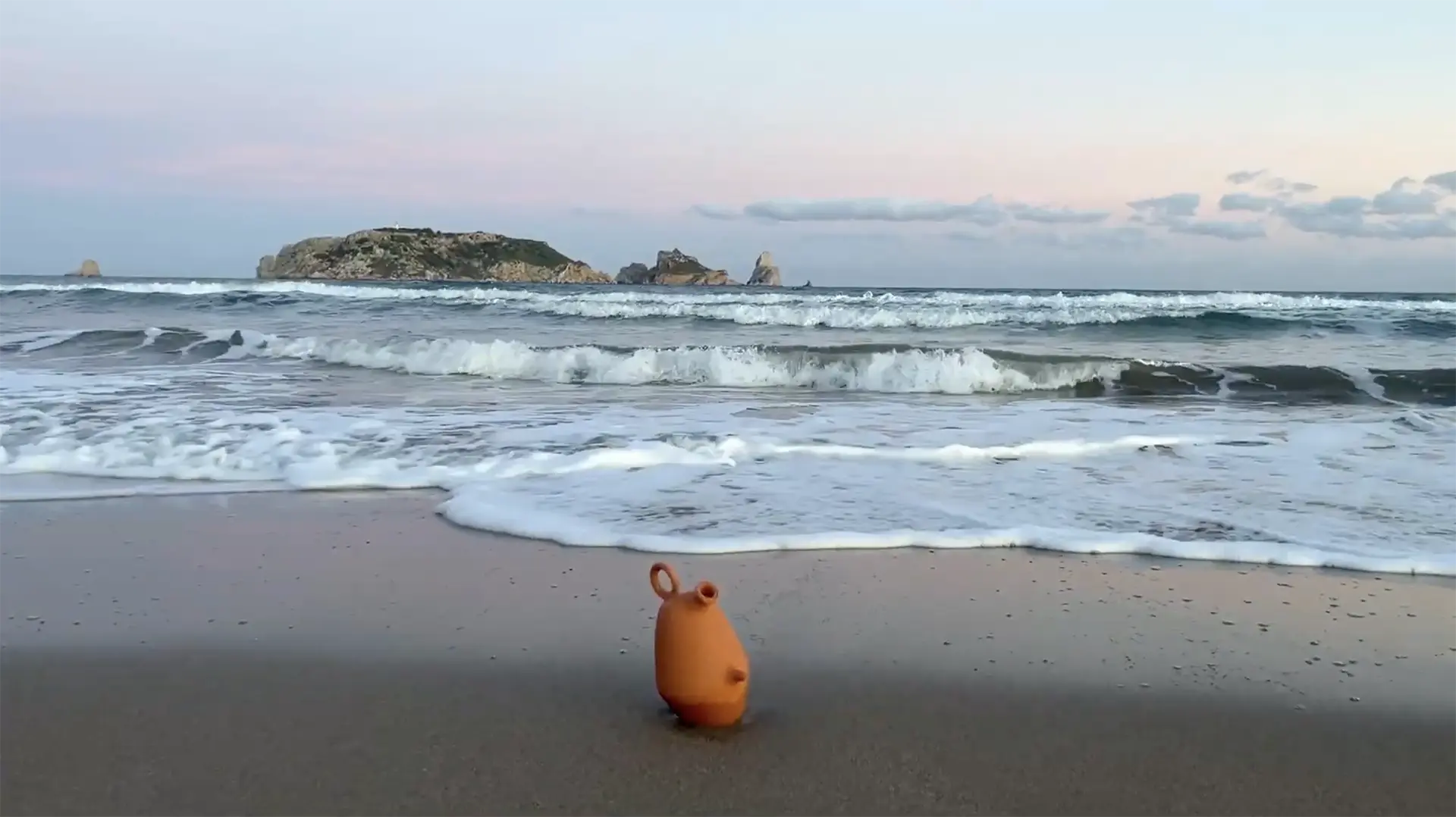
Maria Casadellà Xifra’s project facilitated collaborations between sea currents and local clay to produce traditional Catalonian drinking vessels co-designed by water itself.
Ritual, Resistance and Collective Gesture
Water was approached through the rituals that shape both private habits and collective practices.
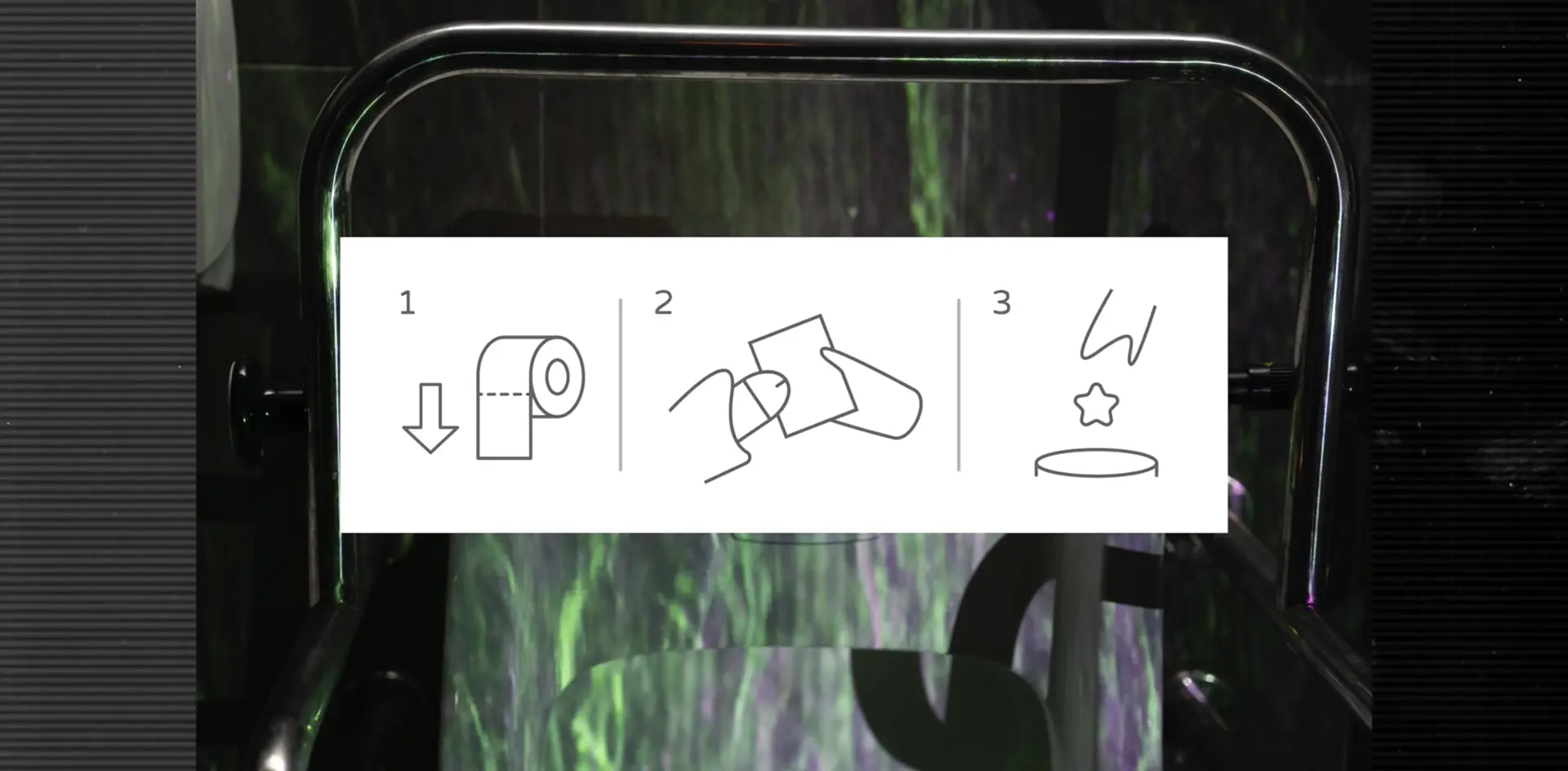
Joe Chiang’s The Spectre transformed a stigmatised private act—men wiping after urination—into a public reflection on masculinity and care, through visual and spatial intervention.
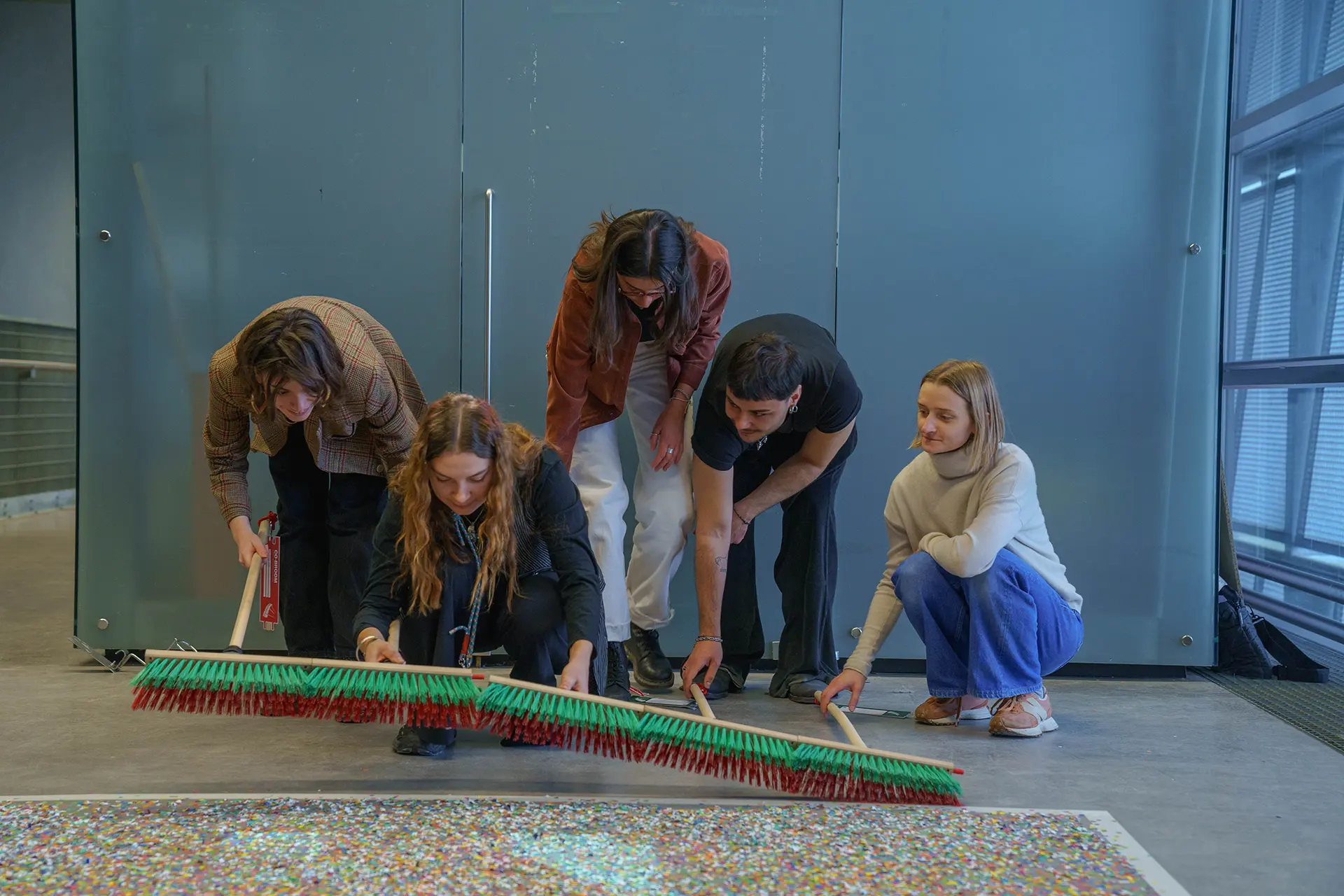
Julian Allgoewer’s Co-Broom used the everyday broom as a tool to stage collective actions of cleanup, care and solidarity during environmental breakdown.
Read together, these projects problematised, probed, complicated and reimagined the relationships we have with water, big or small, in ways to challenge who we are and how we want to live. Ultimately asking what different worlds, what different stories, what different rituals, exchanges of culture, or societies could emerge?
Reading list
-
Akomolafe, Bayo. “Is There a Solution for Climate Change?” YouTube Video, 4:52. Posted by Science and Nonduality, February 4, 2022. https://www.youtube.com/watch?v=xIr2hOMVhIc.
-
Akomolafe, Bayo. ‘What Climate Collapse Asks of Us.’ Bayo Akomolafe, February 4, 2022. https://www.bayoakomolafe.net/post/what-climate-collapse-asks-of-us.
-
Neimanis, Astrida. Bodies of Water: Posthuman Feminist Phenomenology. London: Bloomsbury Academic, 2017.
-
Krause, Franz, and Veronica Strang. ‘Thinking Relationships Through Water.’ Society & Natural Resources 29, no. 6 (2016): 633–38. https://doi.org/10.1080/08941920.2016.1151714.
Credits
Credits
Water Council of Relationality was a collaboration between the Social Design Master’s programme at Design Academy Eindhoven and the Institute of Applied Arts at National Yang Ming Chiao Tung University, made possible through the Virtual International Collaboration in Higher Education Grant from the Dutch Ministry of Education, Culture, and Science.
Led by head of department Nadine Botha with tutors Pete Fung, Kuang-Yi Ku, Alexandre Humbert, Christine van Meegen, and Matilde Patuelli. Guest lectures included Franz Krause, Gundega Strauberga, Henriette Waal, Ironing Board, Iván L. Munuera, Julia Lohmann, Moreno Schweikle, Noam Youngrak Son, Rianne Makkink, Sarah Fitterer, Soph Boobyer, and Wen-Ling Hong.